Vera Becker · 9 September 2026
Insights into Long-Term Traffic Stabilization Following Content Management System Changes
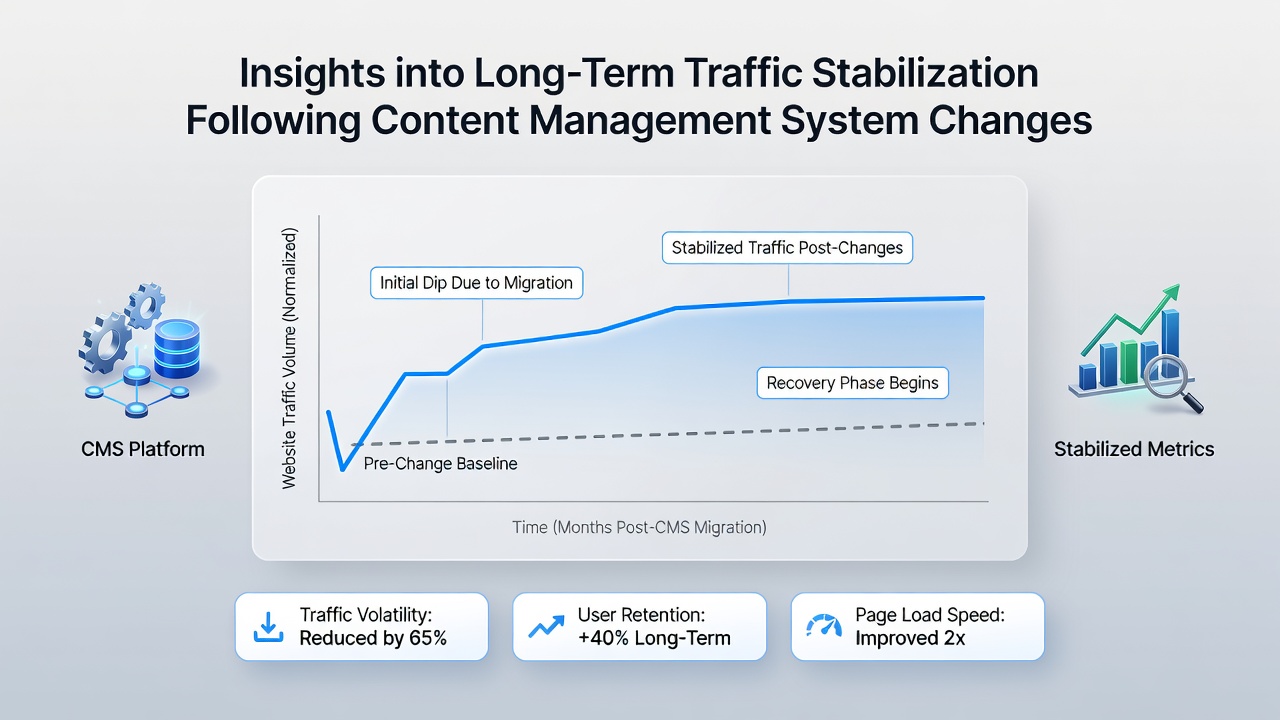
Organizations that migrate to new content management systems frequently observe initial traffic fluctuations followed by gradual stabilization, with patterns emerging across multiple industries and timeframes. Research from various academic institutions indicates that these adjustments often span 12 to 24 months before metrics return to pre-migration baselines or exceed them in some cases.
Initial Disruptions and Early Recovery Phases
Content management system transitions typically trigger changes in crawl frequency, indexing rates, and user engagement signals, all of which influence search visibility during the first several quarters. Data from industry reports show that sites experience reduced organic sessions immediately after launch because search engines must reprocess updated site architectures, new URL structures, and revised internal linking schemes. Those who've studied migration outcomes note that proper implementation of 301 redirects helps preserve link equity, allowing recovery to begin within three to six months when technical elements align correctly.
Yet recovery timelines vary depending on the scale of content transferred and the thoroughness of pre-launch testing. One study from the University of Melbourne revealed that organizations conducting extensive audits of canonical tags and schema markup saw faster rebounds in key performance indicators compared to those addressing issues reactively. Search engine algorithms continue to evaluate site quality signals during this window, which means consistent content updates and mobile optimization efforts contribute directly to renewed indexing momentum.
Factors Influencing Extended Stabilization
Long-term traffic patterns depend on several interconnected elements that unfold over years rather than months. Site speed improvements introduced during migration often compound over time as caching mechanisms mature and server configurations optimize. Observers note that platforms incorporating modern database structures tend to support higher volumes of concurrent user requests without performance degradation, supporting sustained engagement metrics.
External backlink profiles also play a role as referring domains gradually recognize and index refreshed content. According to figures from the Canadian Digital Analytics Association, domains that maintained active outreach campaigns during the post-migration period recorded steadier growth in referral traffic than those relying solely on organic discovery. Meanwhile, internal content refreshes help search engines identify updated relevance signals, which reinforces ranking positions across competitive keyword sets.
Observations Through September 2026
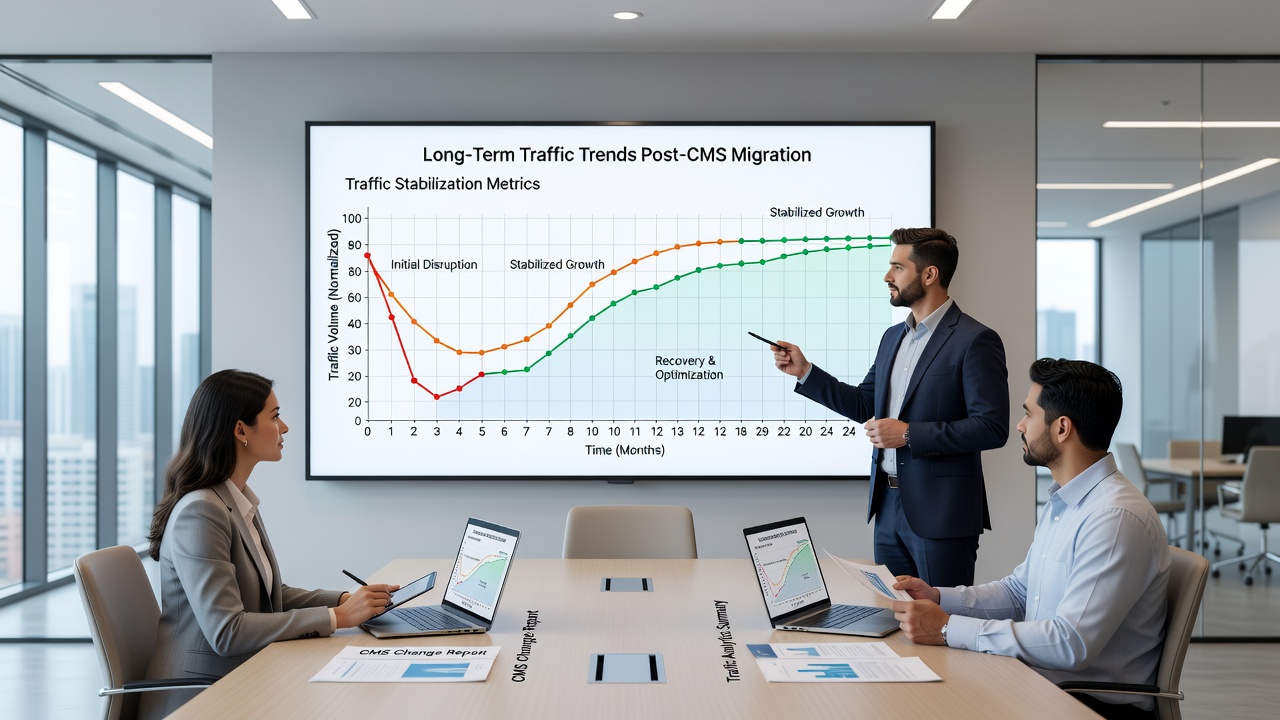
Tracking data extending into September 2026 demonstrates that many sites reach equilibrium between 18 and 30 months after completing major platform shifts. European Commission digital economy reports highlight how regulatory emphasis on accessibility standards has prompted additional updates during this stabilization window, further influencing user retention rates. Organizations that integrated structured data enhancements early in the process frequently report higher click-through percentages in search results pages once algorithms fully account for the new markup.
Case examples from enterprise migrations show that ongoing monitoring of core web vitals remains essential because incremental browser updates can reintroduce performance variables. Researchers at institutions across Australia have documented how sites maintaining detailed change logs during migration phases encounter fewer unexpected ranking drops in later years. These logs enable precise identification of which modifications correlate with traffic plateaus or continued upward trajectories.
Strategic Adjustments That Support Sustained Performance
Teams that prioritize iterative improvements after the initial launch often achieve more consistent traffic levels over extended periods. Regular audits of redirect chains prevent accumulated technical debt that might otherwise erode authority passed from legacy pages. Industry analyses indicate that incorporating user feedback mechanisms into the new system allows content teams to refine navigation paths, which indirectly supports lower bounce rates and higher session durations.
Collaboration between development and marketing departments proves valuable when addressing algorithm shifts that occur years after migration. Data compiled by research groups in Singapore shows that cross-functional reviews conducted at six-month intervals help surface emerging issues before they affect broader visibility metrics. Such practices contribute to the overall resilience of organic channels as search landscapes evolve.
Conclusion
Long-term traffic stabilization after content management system changes follows predictable stages when foundational technical requirements receive attention throughout the process. Evidence gathered from multiple regions confirms that patience combined with systematic monitoring yields measurable improvements in organic performance beyond the first year. Organizations benefit from viewing migration not as a single event but as the start of an ongoing optimization cycle that adapts to both platform capabilities and external algorithm developments.