Blake Meier · 23 September 2026
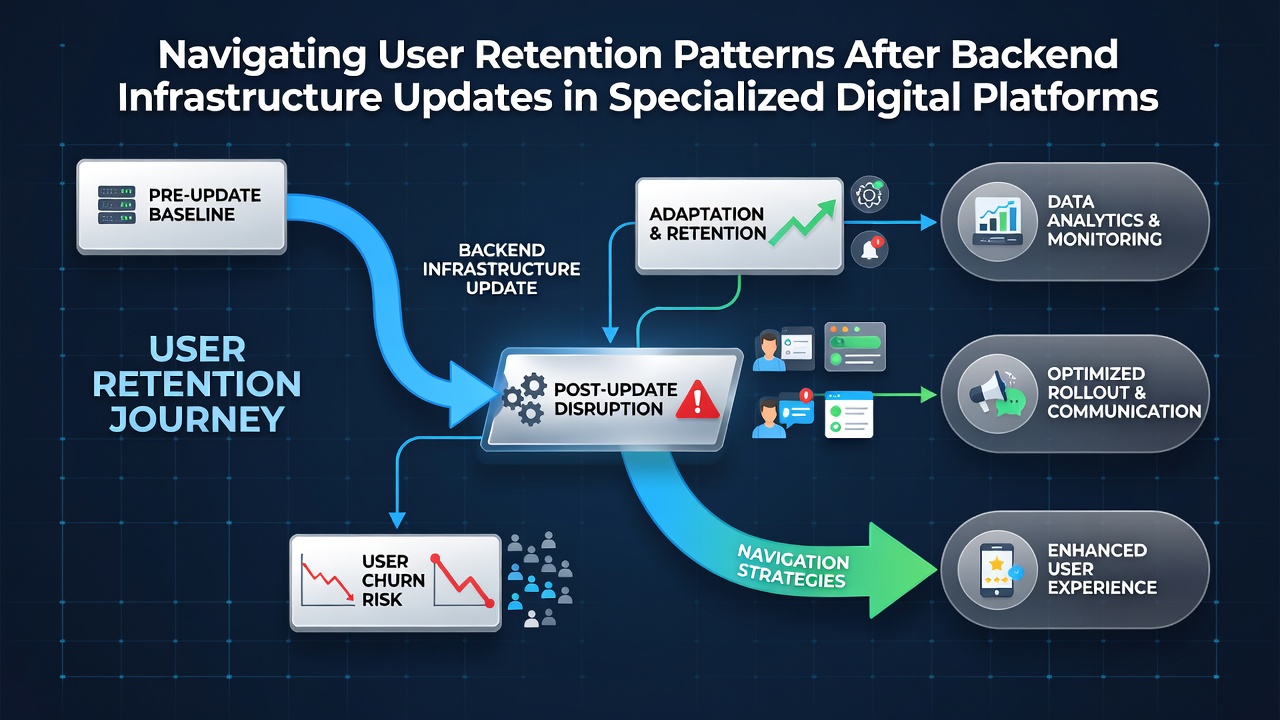
Navigating User Retention Patterns After Backend Infrastructure Updates in Specialized Digital Platforms
Specialized digital platforms often undergo backend infrastructure updates to improve scalability, security, and performance, and these changes can influence how users interact with the systems over time. Data from platform analytics indicates that retention rates frequently shift within the first 30 to 90 days following such updates, particularly when latency decreases or new features integrate with existing workflows. Researchers have tracked these patterns across sectors including healthcare administration tools, educational resource portals, and professional collaboration networks, where even minor adjustments in data processing can alter session durations and return visit frequencies.
Common Types of Backend Updates and Initial User Responses
Backend updates typically fall into categories such as database migrations, server architecture overhauls, and API enhancements, each carrying distinct effects on user behavior. Database migrations, for instance, may reduce query times yet temporarily disrupt cached user preferences, leading to brief spikes in support tickets before stabilization occurs. Server architecture changes often improve reliability during peak loads, and studies from the OECD on digital infrastructure show that platforms experiencing these updates report measurable gains in uptime metrics by the end of the third quarter. API enhancements meanwhile allow smoother third-party integrations, though users accustomed to older endpoints sometimes require adjustment periods that affect engagement continuity.
Tracking Retention Metrics Through Structured Analysis
Platform operators collect retention data through cohort analysis and funnel tracking, comparing pre-update baselines with post-update performance at weekly intervals. Evidence from industry reports reveals that platforms serving niche professional communities see retention curves flatten more quickly when updates include clear communication about downtime windows. Those who monitor daily active users alongside feature adoption rates find that certain updates correlate with higher churn among less frequent visitors, while core users maintain consistent access patterns. In September 2026, several specialized platforms documented these shifts through publicly shared telemetry summaries, highlighting how segmented user groups responded differently based on their prior interaction history.
Key Factors That Shape Post-Update Retention Outcomes
Multiple elements combine to determine whether retention improves or declines after infrastructure changes. Performance improvements in load times often encourage longer sessions, whereas incomplete data synchronization can prompt users to explore alternative services. Communication strategies play a measurable role as well, since platforms that provide advance notices and rollback options tend to retain higher percentages of their established base. External variables such as concurrent industry events or seasonal usage dips further complicate direct attribution, yet longitudinal data sets allow analysts to isolate the infrastructure component through controlled comparisons. Academic examinations from institutions like those affiliated with the University of Toronto have examined these interactions in educational platforms, confirming that transparent update logs reduce confusion among users who rely on consistent data flows.

Methods Employed to Maintain Continuity During Transitions
Operators apply several techniques to guide users through backend transitions without abrupt drops in activity. Staged rollouts permit testing with limited user segments before full deployment, allowing teams to adjust parameters based on observed feedback loops. Parallel monitoring systems track error rates alongside retention indicators, enabling rapid responses when anomalies appear in specific geographic regions or user cohorts. Some platforms integrate in-app guidance that highlights new backend efficiencies, helping users recognize tangible benefits that encourage continued participation. Figures from regulatory bodies such as the Australian Competition and Consumer Commission illustrate how these preparatory steps align with broader expectations for service reliability in digital environments.
Observations Across Different Platform Categories
Specialized platforms in regulated fields demonstrate distinct retention trajectories compared with general-purpose tools. Healthcare-focused systems, for example, prioritize compliance features during updates, and retention holds steady when data integrity remains uncompromised throughout the process. Educational platforms often experience renewed engagement when backend changes enable faster content delivery, particularly around academic calendar milestones. Professional networks report steadier retention when updates enhance search and notification systems without altering core profile management functions. These category-specific patterns emerge consistently in aggregated industry data, underscoring the value of tailoring update strategies to the primary use cases of each platform type.
Conclusion
Backend infrastructure updates continue to reshape retention patterns on specialized digital platforms through measurable changes in performance, communication, and feature delivery. Systematic tracking combined with targeted mitigation approaches allows operators to navigate these shifts while preserving established user bases across diverse sectors. Ongoing analysis of metrics from periods such as September 2026 provides further reference points for refining future update processes.